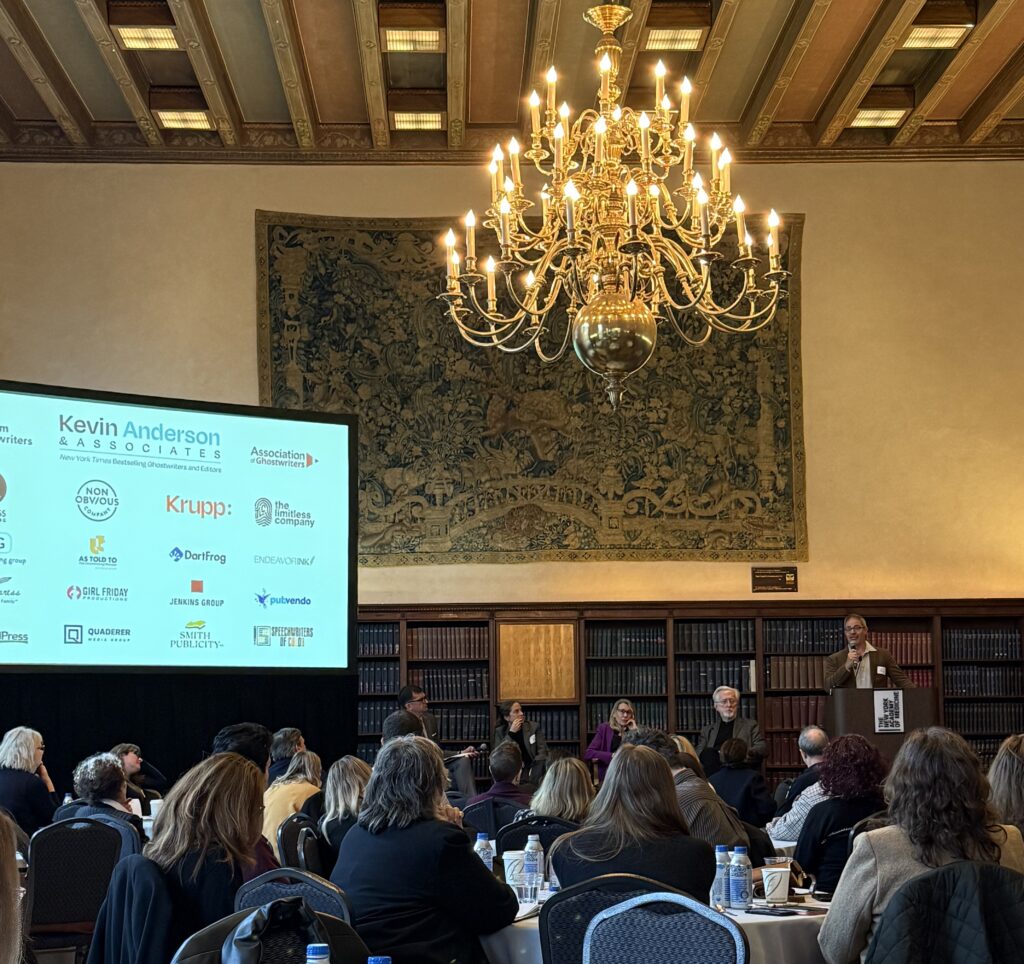
I spent the beginning of this week in New York at the second-annual Gathering of the Ghosts, a unique event that gathers ghostwriters, book publishers, and agents to compare notes about how we help people tell (and sell) their stories.
If I had to choose one word to describe ghostwriters as a group, it’s “curious.” Writing a book about someone else’s life/work/story requires a deep and immersive curiosity about how other people think. We’re collaborators whose defining characteristic is our appetite for learning. Call us nosy, but it’s what makes ghostwriters arrive at this work and what keeps us doing it.
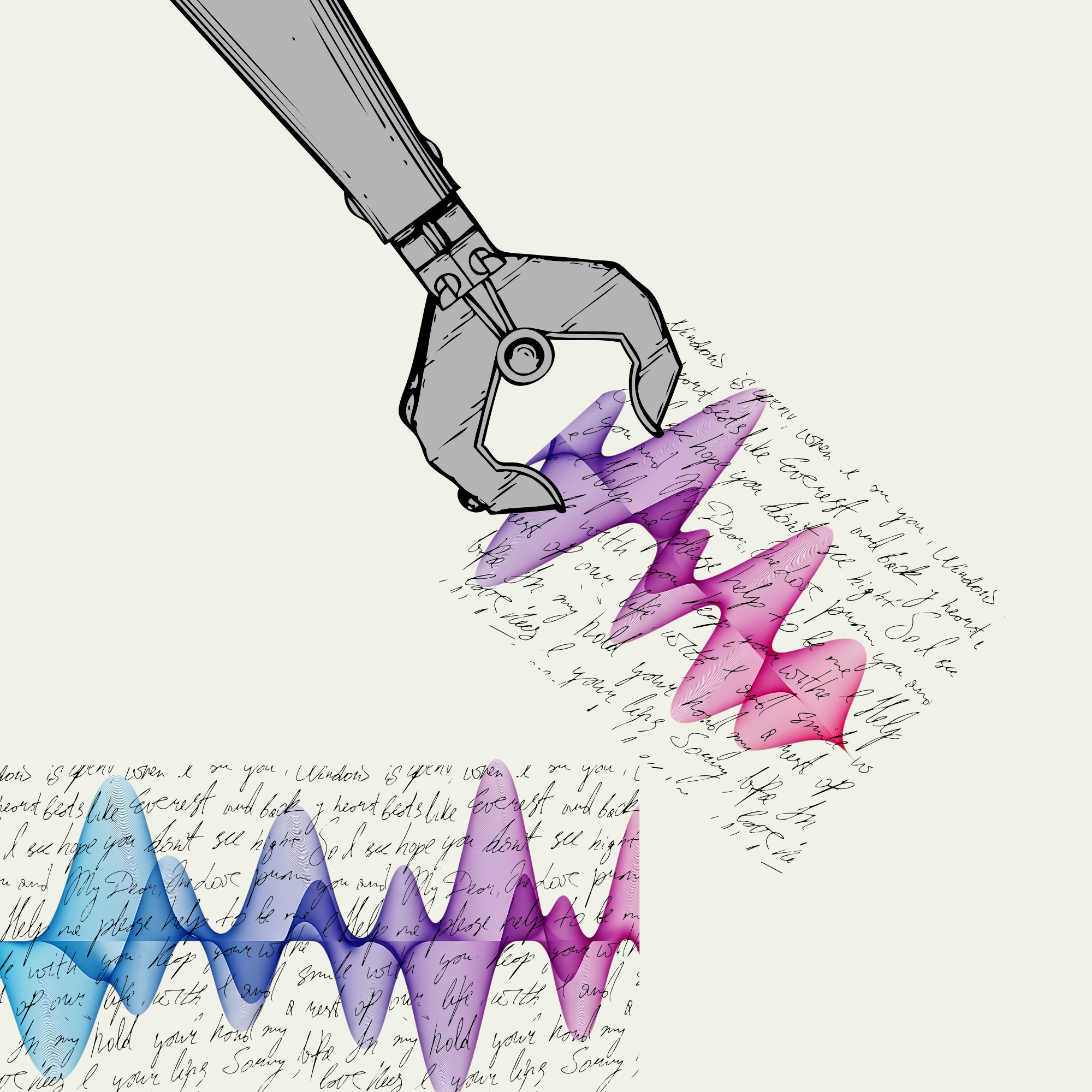
Here’s a topic that sparked my curiosity this week: AI.
You’d think that a room of writers would be focused on concerns about AI “taking our jobs.” But as one panelist put it, “AI is a better writer than most people out writing in the world…but not better than anyone in this room.” At this point in the evolution of AI use, we’ve all seen enough awful AI-generated slop to feel confident that human writing done by professionals at the top of their field will become more valuable, not less.
Instead, the AI conversations at Gathering of the Ghosts flagged a different concern for me: Privacy.
How I approach AI
Here’s some context about how I’ve been thinking about AI. I’m open-minded about how AI can make my work easier, faster, and better. I celebrated when I realized that I no longer had to pay human transcriptionists to listen to my interview recordings. I’ve taught my fifth grader the magic of Grammarly. ChatGPT is my favorite thesaurus. I also ghostwrite and shape a lot of content about how different industries are using AI, so I’m not hiding from technology that is clearly here to stay.
The privacy paradox we should all be watching
But I think that, as a business community, most people are asleep at the wheel when it comes to how much of their data they may be unintentionally exposing to AI.
We already know that AI companies trained their models on millions of pirated book manuscripts. The CEO of the Authors Guild was on stage at the event, highlighting potential future licensing deals for authors to earn some compensation from the use of their work.
But do we think about the words we’re feeding to AI every week?
⁉️When you upload a recorded conversation to any AI-powered tool, is your confidential discussion being used to train the model?
⁉️When you drop a draft into ChatGPT and ask it to edit, where does your draft go? Where might it resurface?
While many of the conversations this week were about adopting AI, experimenting with it, and letting it into our work, there were fewer clear answers to these questions about how to protect our data.
“Be careful what you upload”
What’s the best path forward if you value innovation (you’re down with AI!) and privacy (but please don’t take your confidential conversations and proprietary work!)?
The advice I heard from AI experts at Gathering of the Ghosts was simple: Be careful.
A Chief AI Officer with a PhD told us that we should all get on board with AI so that we understand the inevitable future (OK, agreed) and later casually said, “nothing that you give AI is safe.” All consumer versions of AI tools expose your data, she told us — even the paid versions. And even if you’ve clicked a setting to turn off data sharing, those settings are likely to change, and you can bet that the tools will use your inputs to train their models. Only give AI content that is publicly available.
During another panel, I asked the group of AI power users and AI company leaders on stage what tools they suggested to keep information secure.
The answer: “If you’re concerned about privacy, be careful what you upload.” And: “You can only be certain your data isn’t being used if you use these tools on a local server, not on the cloud.”
That answer was a red flag to me, and it doesn’t seem practical for 99% of people who use AI in their work.
I walked away from the event with more caution about which AI tools I’m using and what information I let AI anywhere near.