

We’re a couple of months into 2026, and here’s my question for you:
What have you learned so far this year?
If you have any goals for “thought leadership” this year, or just want to be known for your ideas and your work, you have to answer this question first.
Why reflection matters
If you want to be known for your ideas, you have to carve out time to generate those ideas.
It’s easy to just do the work. Keep your head down. Keep your calendar full. Jump to the next call without taking a second to breathe or reflect on the last one.
But when we race through our work weeks, we eliminate our ability to reflect on our work. If you keep pushing forward without ever taking a beat to consider what you’re learning, all of the juicy and helpful insights get lost in the shuffle.
And unfortunately, AI isn’t an easy button here. AI can’t cook up good ideas about your work for you. (I mean, it can, but AI can cook up those same “good” ideas for everyone else in your field, so…)
Through my work over the past 15 years with smart leaders, I’ve learned just how critical it is to pause and reflect on your work.
Reflection is so important that I built it into my core thought leadership framework:
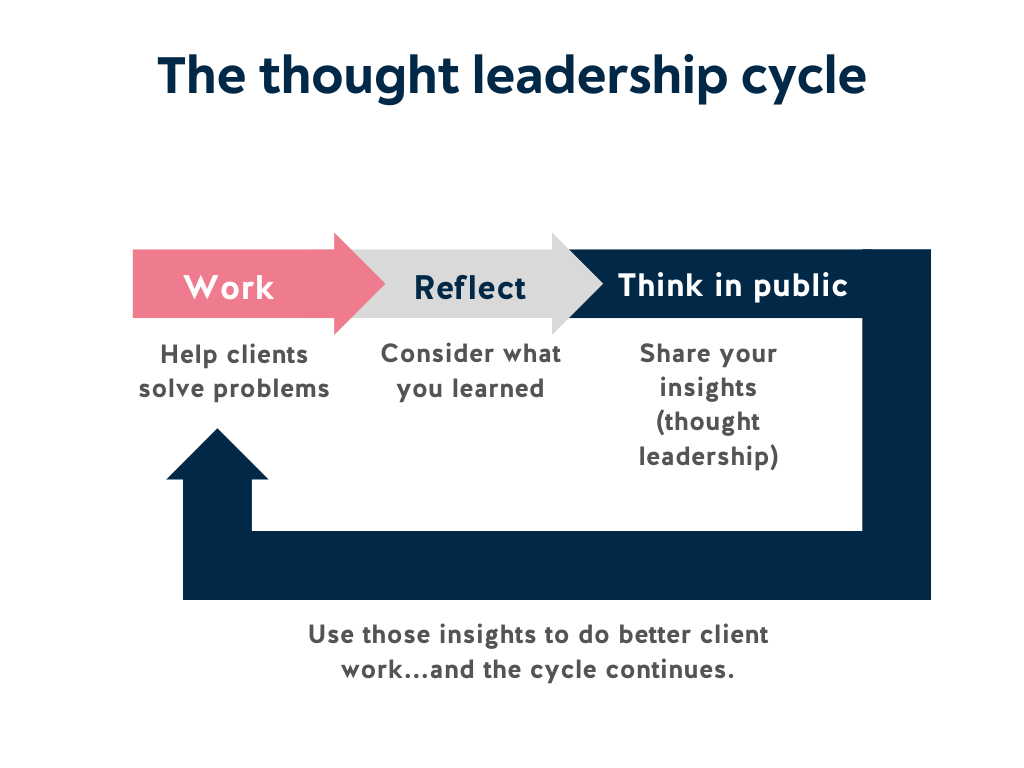
Doing the work is just one part of the equation. There’s an important middle step between “do the work” and “go post on LinkedIn.” There it is — my favorite word: Reflect!
How to start your reflection practice
If you don’t have any accessible answers to the question, “What have you learned so far this year?” then you need a reflection practice.
Here’s the good news: A reflection practice can be short, simple, and free. You don’t need fancy notebooks or a meditation retreat or even a paid thought partner like me to ask you questions.
What you do need is time. Thirty minutes is a great start. Block out 30 minutes on your calendar. Some people like to start their Mondays by reflecting on the previous week, recentering on what they’re learning, and noting the questions they want to explore in the week to come. Some people prefer reflecting every Friday, when email is slower and the ease of the weekend is just ahead. They take some time on Friday to consider what they’ve been working on, what’s going well, and what they need to learn more about.
5 thought leadership prompts
If you’re ready to jumpstart your reflection practice, take 30 minutes to think about the questions below. Jot down your thoughts on a scrap piece of paper, in a Google doc, or in an email to yourself. The format isn’t important; the thinking is.
- What new ideas have bubbled up in your work?
- Are your current projects leading you down new rabbit holes?
- What has been challenging about your work so far this year?
- What mistakes have you made? How would you approach those situations differently in the future?
- What has surprised you?
Something important to notice: Each of these prompts requires reflection about your own unique, specific work and experience. AI can’t answer these questions for you, at least not in a way that’s authentic to your actual experience, unless it has access to your brain somehow (a journal, writing you’ve done recently, emails to a friend, etc.). That’s what makes actual thought leadership interesting: it’s a peek into how one person’s brain works and what it really going on in their work right now. Try it!
If you need a guide for next week, here’s a longer list of reflection prompts.