Over the past decade, my work has shifted from writing a lot of short, quick-hit content (an editorial calendar full of LinkedIn posts, email newsletters, blog posts, etc.) to writing one long-form book project at a time.
Here’s what I’m learning about long-haul projects: the progress can feel slow and incremental. But then, suddenly: Eureka! There’s incredible power in talking about the same ideas over, and over, and over again across a span of many months.
When I work with authors over a long period, three patterns emerge: Ideas deepen, ideas diverge, and ideas develop.
- DEEPEN: When you keep circling the same ideas, they evolve and deepen over time.
- DIVERGE: It’s GREAT to disagree with your former self.
- DEVELOP: The thought leadership cycle works best over many iterations.
Here’s what I mean…
DEEPEN: When you keep circling the same ideas, they evolve and deepen over time.

When I first start working with an author to develop their book’s foundational principles, they generally have strong feelings about what they saw happening in their work world. They’re an expert in their field, actively working on projects that teach them every day about how their space is changing. So they have a solid starting point.
But because we’re working over a long time span, they’re able to keep working and learning and bring that learning to the book. AND, they’re able to revisit their initial ideas and continue adding to their original foundations. I hear a lot of “Yes, my idea from months ago still stands, AND I’m also seeing this new dimension now.”
Over the course of a long-haul projects, ideas have time to develop, becoming richer, more nuanced, and stronger as we keep revisiting them. The other day in an interview, an author said, “It’s like the ‘hour’ concept we’ve talked about” and when I searched my 250-page running log of past conversations, I found “hour” 10 times — we’ve re-tread over that same idea 10 different times, giving me an incredible body of content to work from. As the ghostwriter, I’m able to explain the ideas in a much more complex way if the author has shared it with me 10 different times in 10 different ways, using different language and examples each time. The knowledge base I can pull from gets bigger and better every day.
DIVERGE: It’s GREAT to disagree with your former self.

While some ideas deepen and develop over time, some ideas flat-out don’t work when you revisit them. A hypothesis formed in the early days of developing a book idea might not stand 6 or 12 months later.
What’s great about a long timeline is the chance to keep updating, reframing, and sometimes completely disproving the original ideas. If the original hypothesis changes, a long timeline gives an aurhot the runway to understand what they got wrong and reframe it into a stronger concept they’ve learned through trial and error.
My ears perk up every time I hear an author say “I’m not sure I still agree about X” or “Here’s something we need to change…”
At first, authors are hesitant to tell me that they’ve had complete 180-degree changes in thinking (What if it messes up our carefully planned table of contents?!) but I find goodness in the changes of perspective. Good ideas are time-tested and can hold up to new developments and wrinkles.
DEVELOP: The thought leadership cycle works best over many iterations.
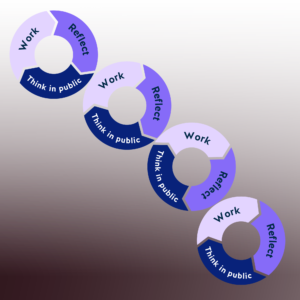
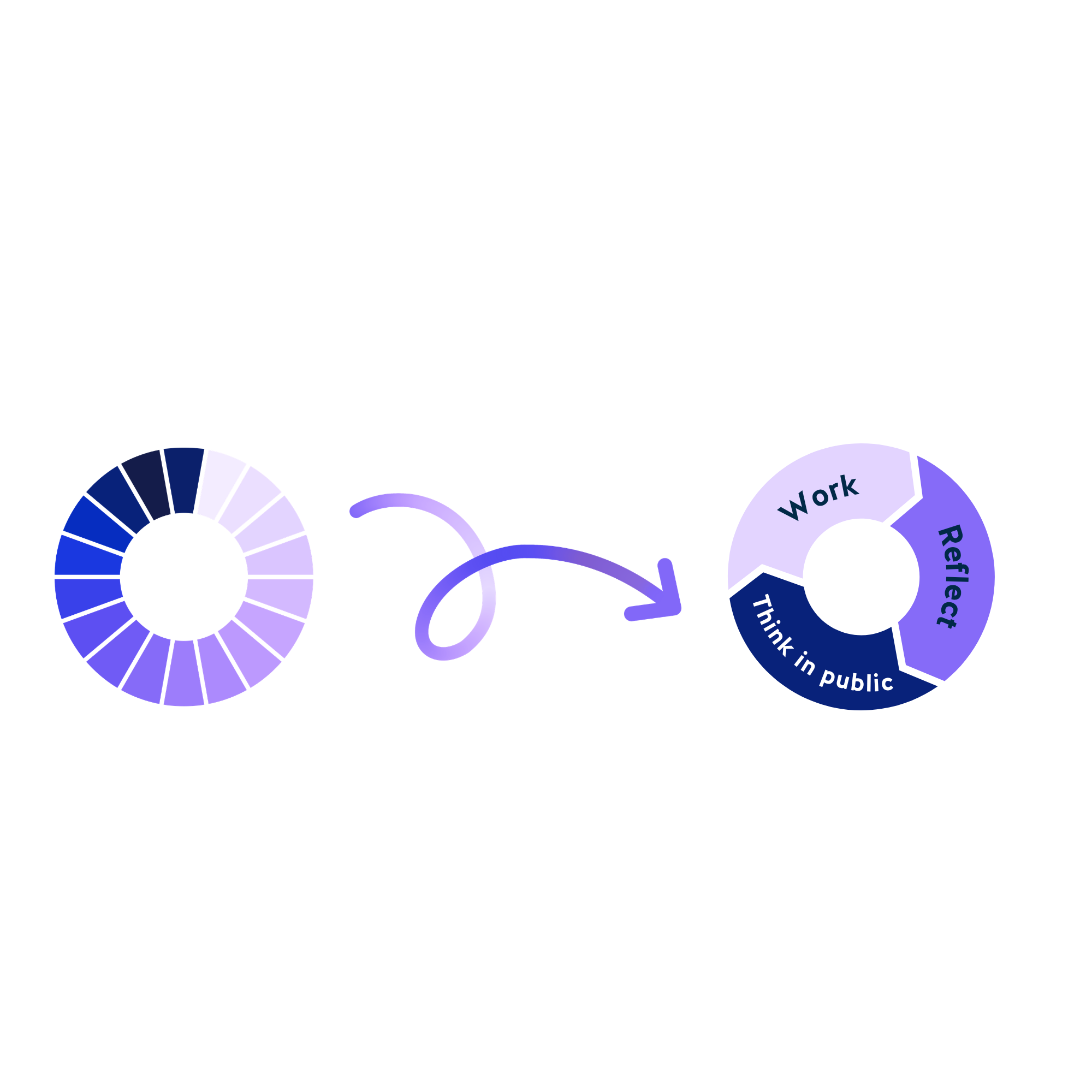
Since 2019, I’ve built my business on a simple framework: Thought leadership is a cycle: Work –> Reflect on that work –> Share your thinking in public –> Use the lessons you’ve learned and insights you’ve honed to make your work better –> Repeat.
I’ve seen the thought leadership cycle work a million times:
- Work: A client works on a project and has a spark of an idea.
- Reflect: I ask a ton of questions, help them reflect on that idea, and work with them to turn their spark into a fully-formed piece (an article, a LinkedIn post).
- Think in public: They share their thinking with their colleagues and clients.
- Repeat: Then they take that content and use it to both sell more work and do the new work even better than they could before. Beautiful!
But with long-term book projects, I see the thought leadership cycle run itself through many iterations. The cycle looks like:
- Work: The author works on a project and has a spark of an idea.
- Reflect: I help them reflect on that idea, ask a ton of questions, and help them turn their spark into a fully-formed framework or book chapter (or even just a nice sidebar story).
- Think in public: They share their thinking with their colleagues and clients.
- Repeat: Then they take that thinking and use it to both sell more work and do the new work even better than they could before…and to gather more insights and more thinking that they bring back to the book. Beautiful!
Reflecting on your work is a gift and a competetive advantage. It’s a boon to do it once, it’s a boon to do it on a regular basis. But to sit with the same ideas and refine that body of work at a steady cadence over years? It’s a game-changer, and it does much more than just produce content like a book. It produces much better thinking, and as a result, much better work.